
How Often Should You Buy Your Wife Flowers?
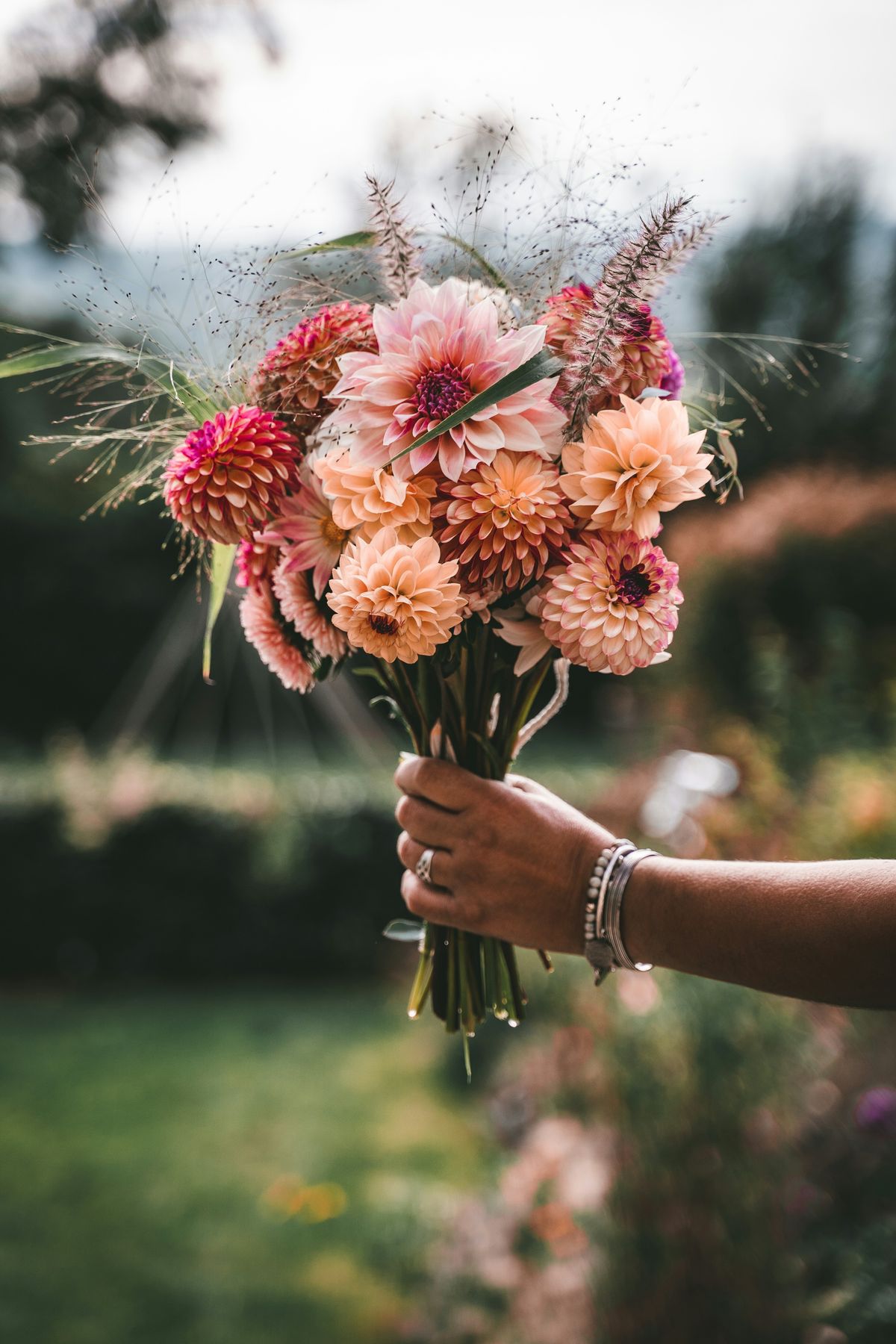
There's no rule, but there is a good default: give your wife flowers on the four dates that matter to her, and add two to four unplanned bouquets a year. That works out to roughly six to eight arrangements a year, or one every six to eight weeks. It's often enough to feel like a habit and rare enough to still feel like a surprise.
The right number depends on three things: what she enjoys, what you can comfortably spend, and whether you'll actually remember. This guide covers each one.
The short version
- Start with her birthday, your anniversary and Valentine's Day, plus Mother's Day if you have kids together.
- Add two to four "just because" deliveries spread across the year. These tend to land hardest because nobody expects them.
- Choose a rhythm you can keep up all year. Consistency matters more than frequency.
- Check for lilies if you have cats. They're one of the most common flowers in mixed bouquets and they're dangerous to cats.
A good default: four dates and a few surprises
The occasion dates are the floor. Flowers on a birthday or anniversary are expected in many relationships, so missing them stands out more than remembering them does.
The surprises are what make flowers feel personal. A bouquet that shows up on an ordinary Tuesday says you were thinking about her when nothing on the calendar told you to.
A simple way to space them out:
| Date | Why it works |
|---|---|
| Her birthday | Expected, and personal to her |
| Your anniversary | Marks the relationship itself |
| Valentine's Day | Widely expected; order early |
| Mother's Day (if you have kids together) | Often from the kids, with your help |
| Early spring | The first local flowers of the year |
| Midsummer | A long stretch with no gift-giving holidays |
| Late fall | A busy, darker season when a bright bouquet helps |
| After a hard week | Unplanned on purpose |
You don't need all eight. Pick the occasion dates that apply, then add whichever surprises fit your year.
Why the small gestures count
Relationship research points toward frequency over size. The Gottman Institute, which has studied couples for decades, sums up its advice in three words: small things often. Regular, modest gestures do more for a relationship than an occasional grand one.
Flowers specifically have some research behind them, with a caveat. In a 2005 Rutgers study published in Evolutionary Psychology, women who received flowers reliably responded with a genuine smile, the kind that reaches the eyes, and reported better moods three days later. A Massachusetts General Hospital study led by Nancy Etcoff found that people living with fresh flowers at home reported feeling less anxious and more compassionate.
The caveat: much of the research on flowers and mood has been funded at least partly by the flower industry. The Etcoff study's funders included the Society of American Florists, according to The Harvard Crimson's 2006 coverage. The findings are plausible and consistent, but treat them as encouraging rather than conclusive.
Pick a rhythm that fits your budget
The easiest way to choose is to decide what you'd spend in a year and work backward. The table below uses $75 per arrangement, including delivery, as an example. It's an illustrative number, not a quote. Real prices vary widely by florist, size and season.
| Rhythm | Arrangements per year | Yearly cost at $75 each | Good fit if |
|---|---|---|---|
| Occasions only | 4 | $300 | You want to never miss the big dates |
| Occasions plus seasons | 8 | $600 | You want flowers to feel like a habit |
| Monthly | 12 | $900 | She loves having flowers in the house |
| Every other week | 26 | $1,950 | Flowers are part of how your home looks |
Two things to keep in mind:
- Spread the money, not just the dates. Eight modest bouquets usually mean more over a year than two enormous ones.
- Order early for the big holidays. Valentine's Day and Mother's Day are high-demand days for florists, so order well ahead and expect less choice the closer you get. In Charlotte, our Valentine's Day 2027 timeline lays out the dates.
The dates that are easy to forget
The big four rarely get missed because they're on every calendar. These are the ones that slip:
- The anniversary of your first date, if she marks it.
- A new job, promotion or finished project. Flowers are an easy way to show you noticed.
- The end of a hard week, or a day you know she's dreading.
- Recovering from an illness or surgery. Check with the hospital first; some units don't allow flowers.
- Her mother's birthday, or another date that matters to her family.
- A difficult anniversary, like the loss of a parent. A quiet arrangement and a short card can mean a great deal. Use your judgment about whether it's welcome.
When more flowers isn't better
Frequency can work against you. If a delivery arrives on the same day every month, it can start to feel like a utility bill rather than a gesture. A few ways to keep it personal:
- Vary the timing. Let surprise deliveries land on different days and weeks.
- Vary the style. A loose, garden-style arrangement one month and a single type of flower the next keeps it from feeling automatic.
- Write the card yourself. One specific sentence beats a generic "thinking of you."
- Ask whether she actually likes cut flowers. Some people would rather have a potted plant, or nothing that needs a vase. Allergies matter too.
If you have cats, avoid lilies entirely. True lilies and daylilies can cause kidney failure in cats, and the ASPCA reports that pollen alone has caused acute kidney injury. Even drinking the vase water can be dangerous. Ask the florist to leave them out. If a cat may have been exposed, call your veterinarian or the ASPCA Animal Poison Control Center at (888) 426-4435 right away.
Girlfriends and partners
The same approach works for any partner. Earlier in a relationship, lean lighter: the occasion dates plus one or two surprises is plenty, and a weekly bouquet three months in can feel like a lot. As the relationship settles, let the rhythm grow with it.
Make it happen without having to remember
Most people who don't send flowers often aren't short on intentions. They're short on reminders. A few ways to take memory out of it:
- Put the dates in your calendar with a lead time. Set the reminder five to seven days before each date, not on the day itself, so you have time to order.
- Set up a standing order with a local florist. Some florists will deliver on a recurring schedule if you ask.
- Use a flower subscription. A flower subscription is a recurring order where a florist or flower company delivers arrangements on a set schedule. Most run on a fixed weekly or monthly cycle to one address. That suits the "flowers always in the house" rhythm better than the date-driven one.
That gap between fixed subscriptions and the dates that actually matter is what we're building Flowers on Cue to close in Charlotte. You tell our concierge, June, about the people and dates you care about. She plans each delivery with a local florist and checks in before it goes out. We haven't opened yet. If you live in Charlotte or nearby, you can join the list to hear when we do.
Whatever rhythm you choose, the best one is the one you'll keep. Start with the dates that matter to her, add a surprise or two, and adjust from there.